Pegote
A web game about stickers and collage: open packs, peel stickers and make sheets, notebooks and stories to share.
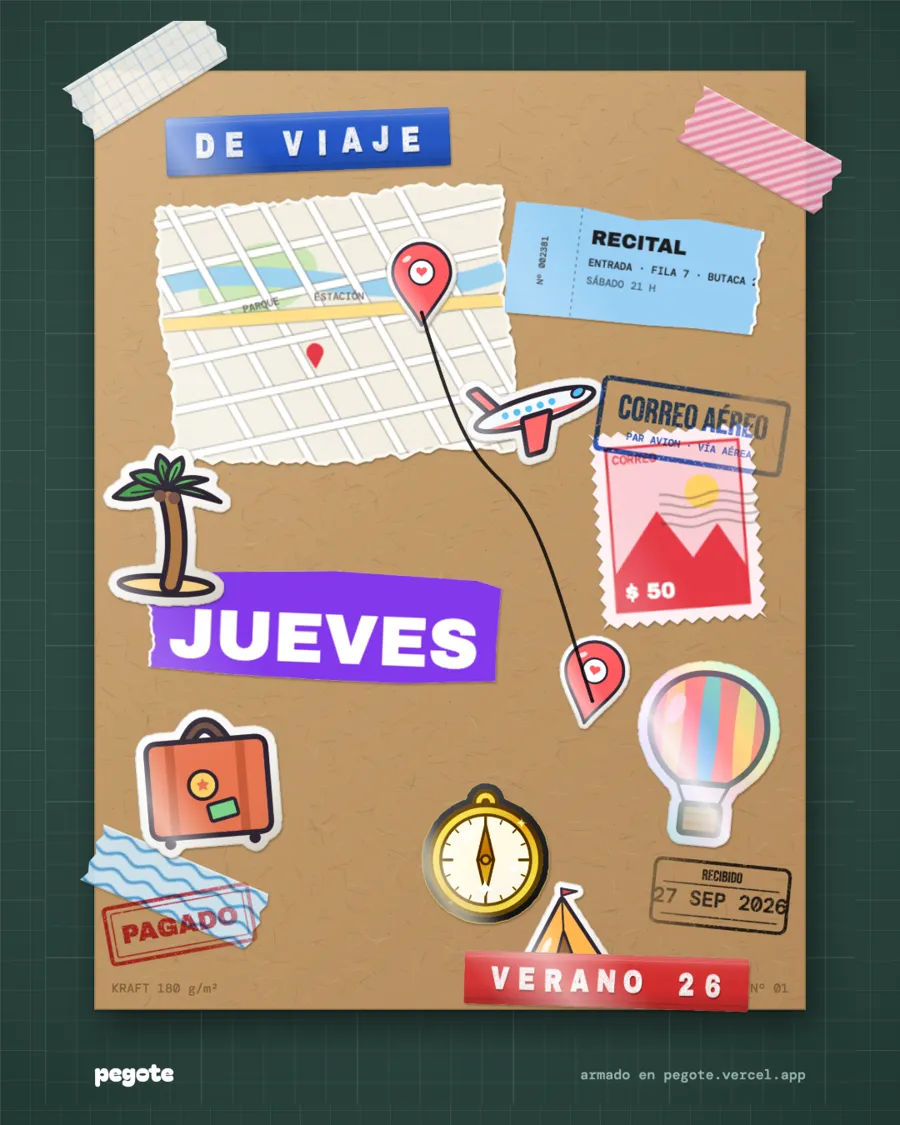
A toy, not an editor.
I wanted to bring the physical pleasure of stickers and scrapbooking to the screen: opening a pack without knowing what is inside, peeling carefully, placing and sticking. Most digital collage tools are built as editors. Pegote is built as a toy: what matters is how each gesture feels.
It is a personal project end to end: product design, interaction design, illustration, development, analytics, communication and community.
A paper world that responds to touch.
Peeling physics
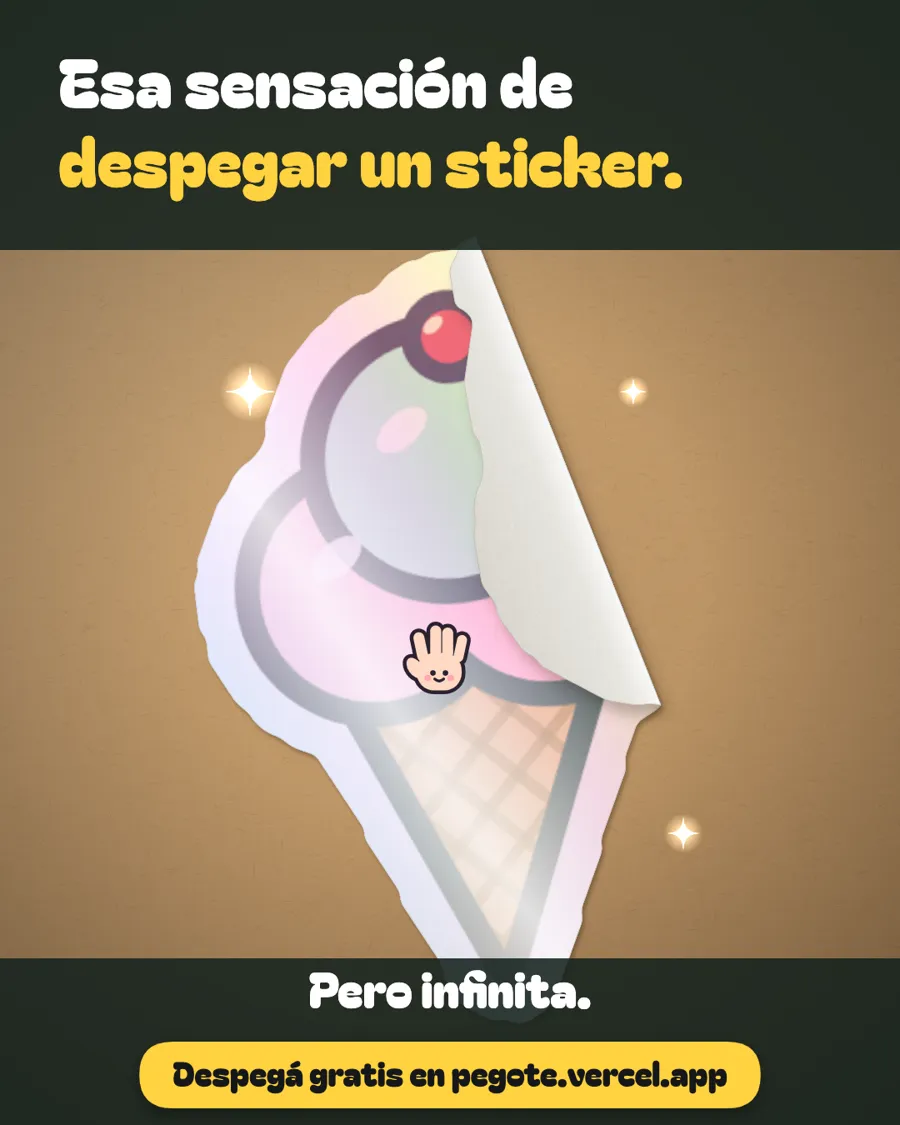
The sticker folds at the exact point where you grab it, with the flap mirrored in real time. Overlapping stickers peel off together and, if you pull a placed one too fast, it tears.
Workbench
Materials, die cuts and freehand scissors with edge styles (waves, zigzag, stamp, torn) to make your own pieces out of papers and cutouts.
Sheets, notebooks and stories
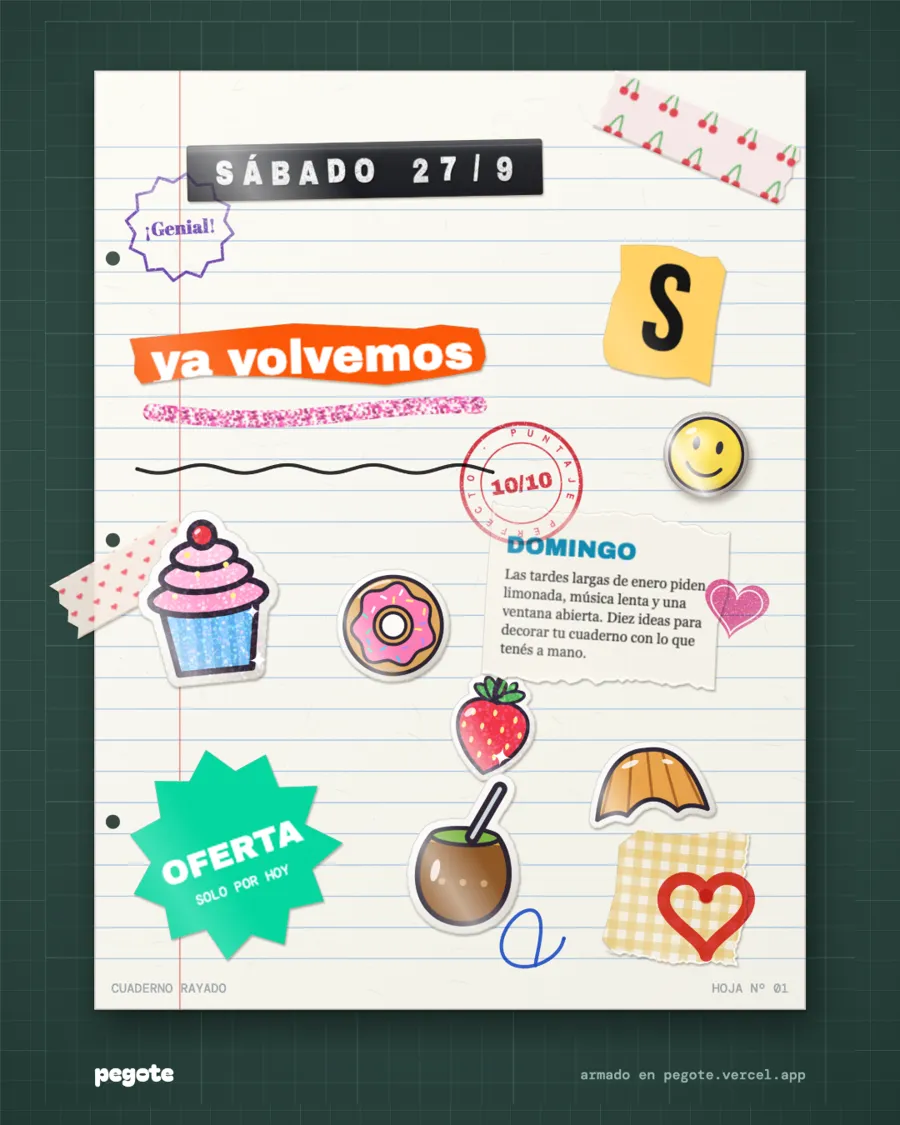
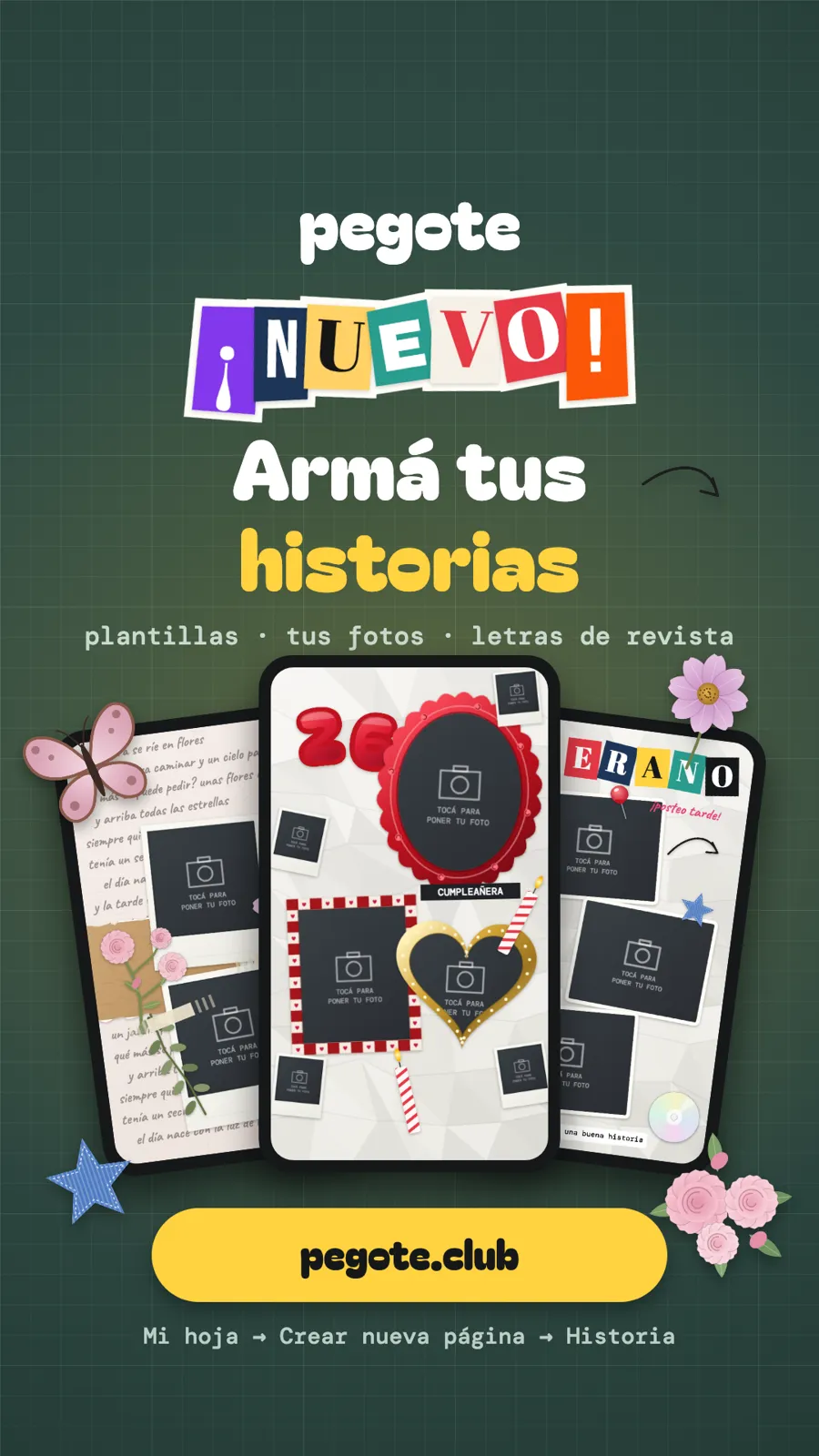
Multiple pages per person, an open spiral notebook and an Instagram story format with editable templates, masked photos and text.
Gifts with a note
You share a sheet with a written or hand-drawn message and it arrives to the other person as an animated letter, no account needed.
Collection and drops
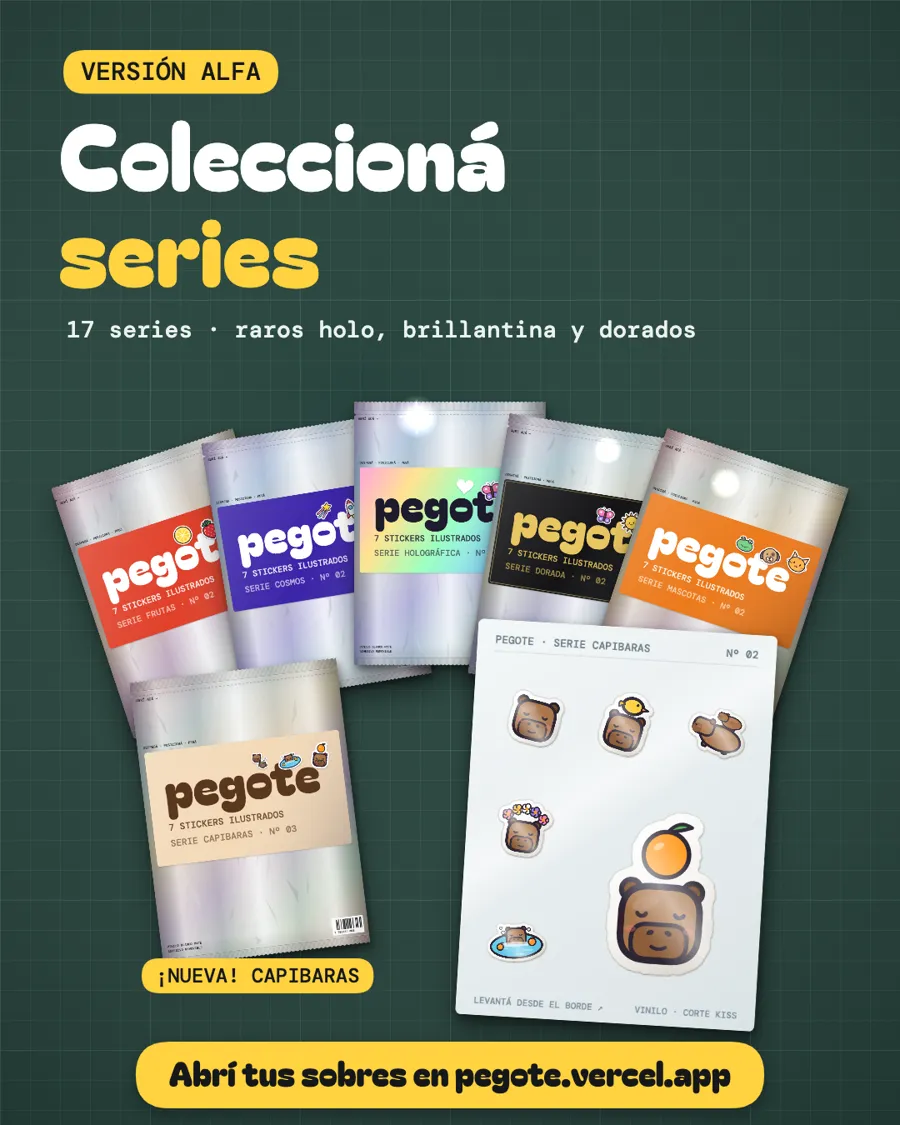
Pack series with rarities (holographic, glitter, gold), special editions unlocked by code and content that arrives on scheduled dates.
Less interface, more gesture.
No modes
The scissors move a piece if you drag it and cut it if you hold it. A version with modes was tested and dropped: every mode switch was one more step between intent and gesture.
Mobile first
Navigation is a floating pill with Packs in the center, chosen among four variants tested inside the real game. The sheet zooms and pans while the tray stays fixed, as in canvas apps.
Removing is designing too
Hints that appeared on touch, mini-games on the table and an extra box were removed because they interrupted. The tutorial no longer starts on its own and is available when people look for it.
Measure before adding
An A/B test of the login flow (popup or redirect) and a dedicated flow for in-app browsers like Instagram's, which block Google sign-in.
Feeling physical on a modest phone too.
Everything static is painted once as a layer and each sticker is cached as its own image; only what moves is redrawn live. Rendering quality adjusts itself if frame rate drops.
Human judgment, AI-assisted build.
I build it with Claude Code as a programming partner: I define the experience, the rules and the quality bar; AI speeds up implementation and testing. Every change is checked with automated screenshots on desktop and mobile.
Sticker series combine illustrations drawn in code, hand drawings and AI-generated art processed with my own scripts. One series uses real, freely licensed photos from Wikimedia Commons, with a credits page.
The launch is an alpha with PostHog analytics: a 23-chart dashboard covering activation, retention, onboarding, guest-to-account conversion, channels and usage.
From solo play to community.
A collection album, sticker trading between people as a path to a marketplace, and a live user counter built with an ESP32 and an e-ink display, which connects this project with the Living lamp.